
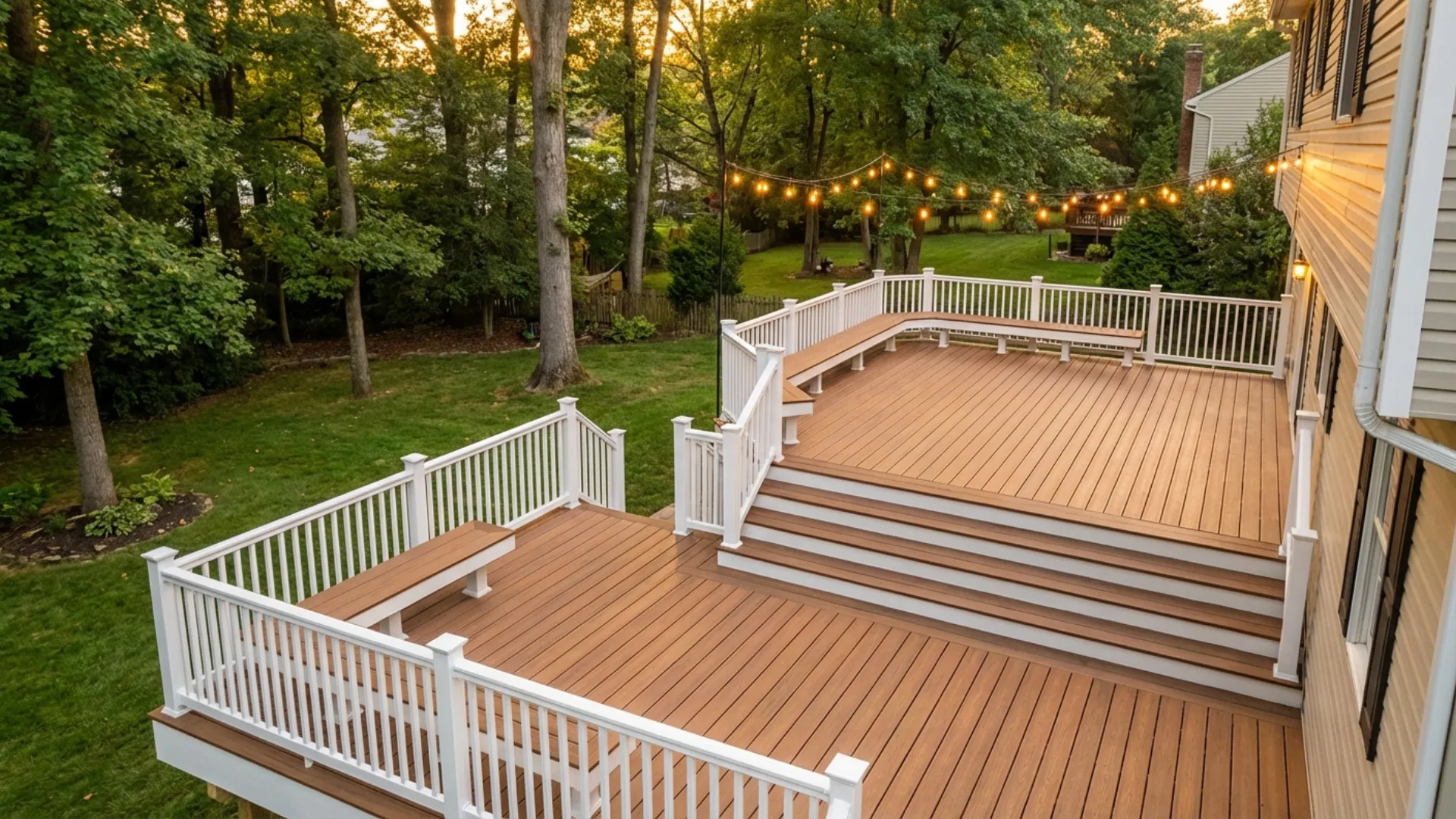
Deck Building in Maryland
Custom-designed decks built with premium materials. From composite and hardwood to screened porches, we create outdoor living spaces your family will enjoy for decades. MHIC #131554.
Custom Design
Every deck is designed around your home, your yard, and how you live. We create layouts that maximize your outdoor space and complement your home's architecture — whether you're in a colonial in Towson or a split-level in Ellicott City.
Premium Materials
We use top-tier decking from Trex, Azek, and TimberTech, plus select-grade lumber and exotic hardwoods. Every board is chosen for durability and backed by manufacturer warranties up to 50 years.
Built to Last
Engineered framing, stainless steel fasteners, Simpson Strong-Tie connectors, and code-compliant construction. Your deck is built to withstand Maryland's freeze-thaw cycles, summer humidity, and years of family gatherings.
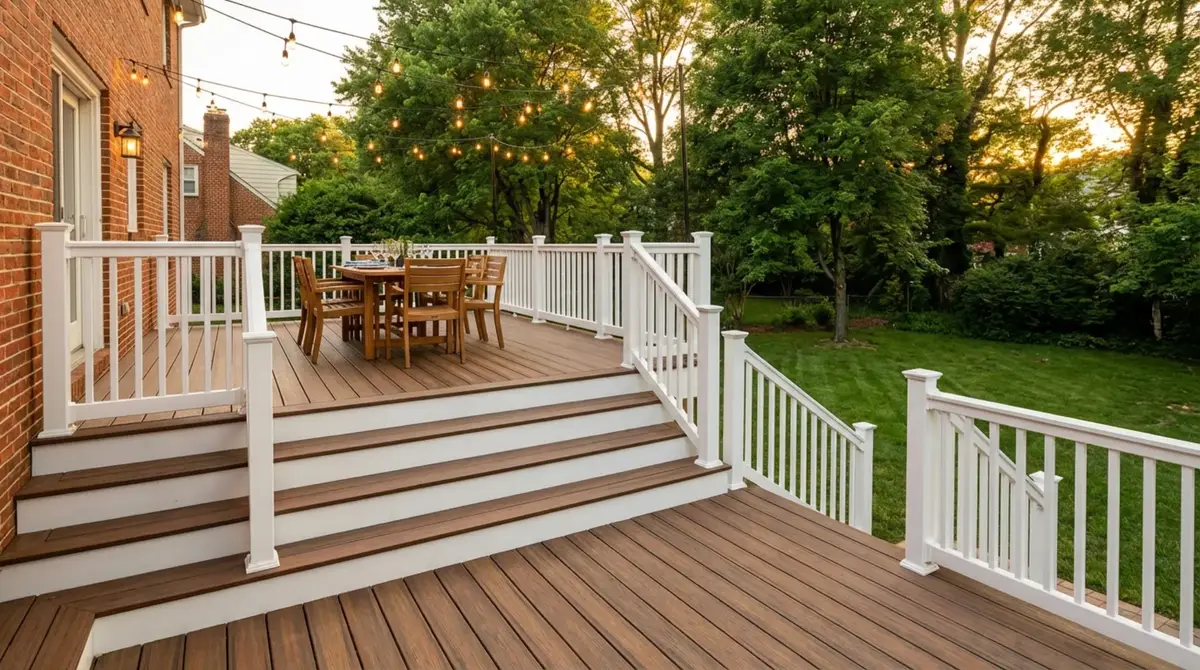
Deck Building Services
From brand-new builds to restoring an aging deck, we handle every aspect of outdoor living construction across Maryland.
New Deck Construction
Ground-up deck builds designed for your home. Multi-level, wraparound, or straight — built to code with premium materials.
Deck Repair & Restoration
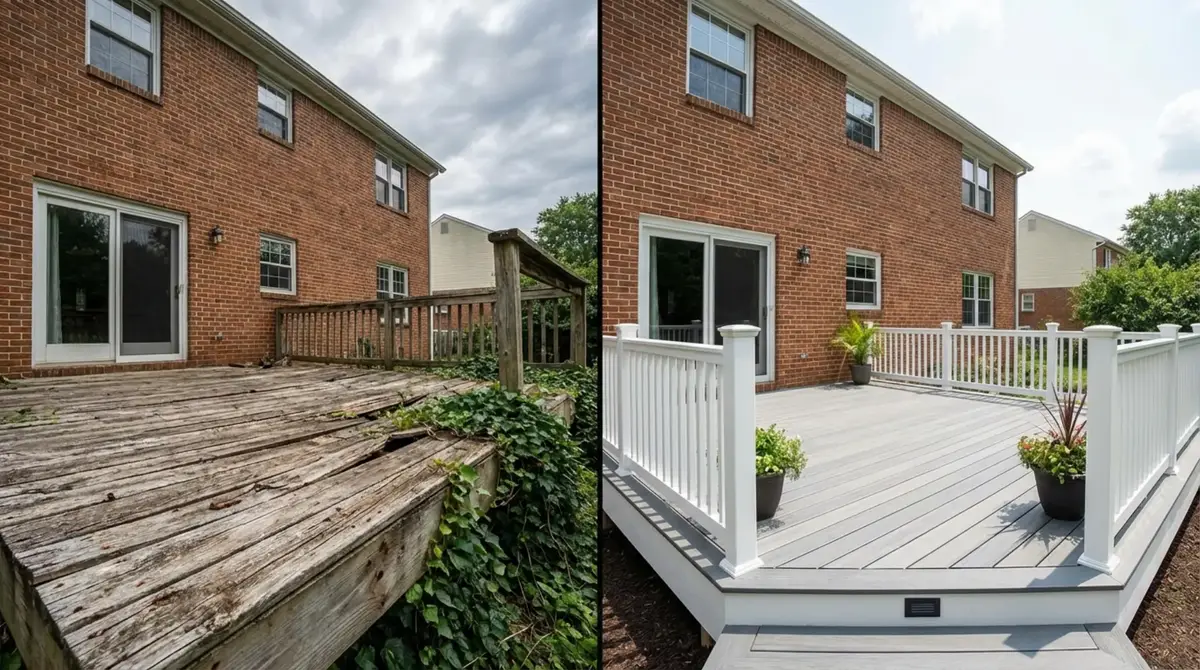
Fix rotted boards, loose railings, structural damage, and worn surfaces. We restore your deck to safe, like-new condition.
Deck Resurfacing
Keep your existing frame and upgrade to composite or new wood decking. A cost-effective way to transform your outdoor space.
Screened Porches
Enjoy your outdoor space bug-free. Custom screened-in porches with ceiling fans, lighting, and year-round comfort.
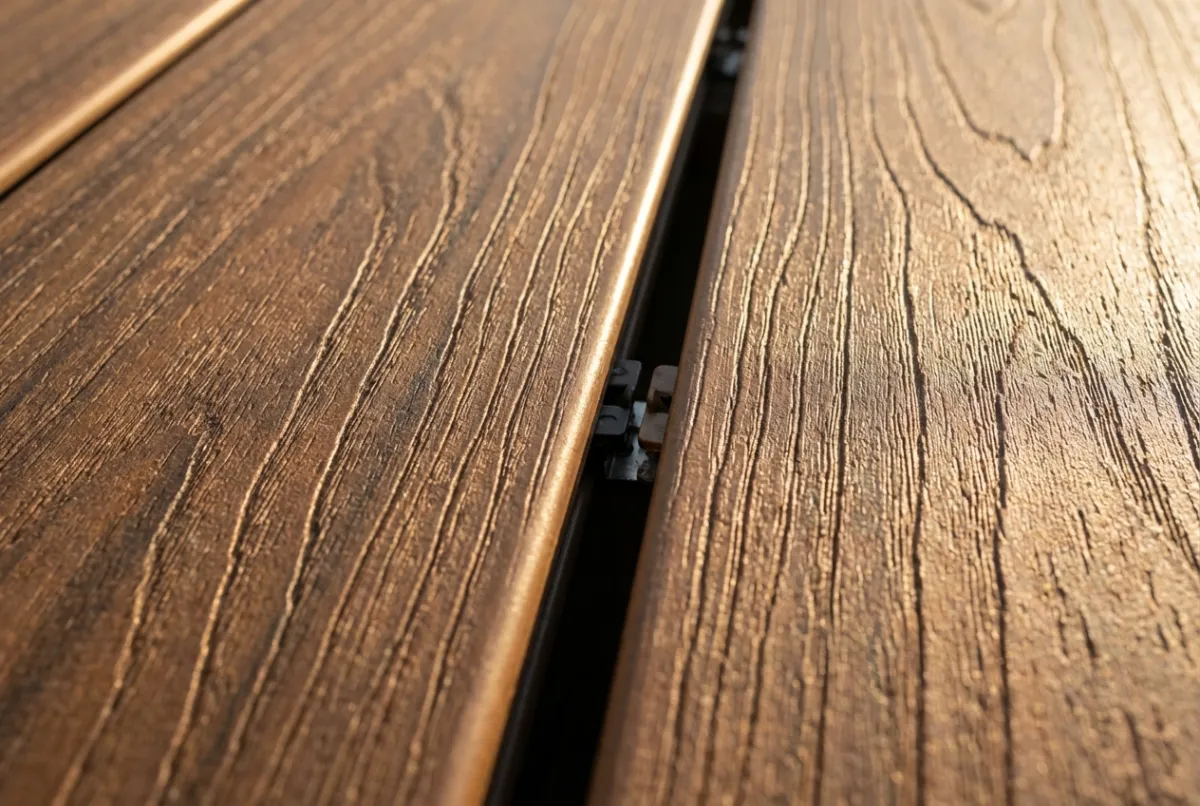
Decking Materials Comparison
Choosing the right decking material is the single biggest decision you'll make. This side-by-side comparison covers cost, lifespan, maintenance, and the best use case for each material we install in Maryland.
| Material | Installed Cost | Lifespan | Maintenance | Best For |
|---|---|---|---|---|
| Pressure-Treated Pine | $15 – $25/sqft | 10 – 15 years | Annual stain/seal, power wash | Budget-conscious builds, large decks |
| Cedar | $25 – $35/sqft | 15 – 20 years | Stain every 2–3 yrs, light wash | Natural beauty, moderate budgets |
| Redwood | $30 – $45/sqft | 20 – 25 years | Oil/seal every 2–3 yrs | Premium look, natural rot resistance |
| Composite (Trex/TimberTech) | $30 – $50/sqft | 25 – 30 years | Minimal — soap & water | Low-maintenance, families, most MD homes |
| PVC / Cellular (Azek) | $35 – $55/sqft | 25 – 30 years | Minimal — rinse only | Pool decks, waterfront, zero moisture |
| Ipe / Hardwood | $40 – $65/sqft | 40 – 75 years | Oil annually or let silver naturally | Luxury, ultra-long lifespan |
| Aluminum | $45 – $70/sqft | 50+ years | Zero — powder-coated finish | Commercial, docks, fire-resistant needs |
All prices include materials, labor, standard railing, and typical site preparation for Maryland's central corridor. Prices current as of 2026. Exact pricing depends on your specific project — get a free estimate.
Deck Building Cost by Project Size
What does a deck actually cost? Here's a transparent breakdown by deck size and common add-ons. All prices include materials, labor, permitting assistance, and standard railing unless noted.
| Project Size | Square Footage | Typical Price Range |
|---|---|---|
| Small Deck | 100 – 200 sq ft | $3,000 – $10,000 |
| Medium Deck | 200 – 400 sq ft | $8,000 – $20,000 |
| Large Deck | 400 – 600 sq ft | $15,000 – $35,000 |
| Multi-Level / Custom | 600+ sq ft | $30,000 – $75,000+ |
| Popular Add-On | Typical Cost | Details |
|---|---|---|
| Railing Systems | $20 – $60 / linear ft | Vinyl, composite, aluminum, cable, or glass panel |
| Stairs | $1,000 – $3,000 per flight | Wood or composite treads, code-compliant risers |
| Built-In Seating | $2,000 – $5,000 | Bench seating, storage benches, planter boxes |
| Pergola | $5,000 – $15,000 | Attached or freestanding, wood or vinyl, optional retractable shade |
| Deck Lighting | $1,000 – $4,000 | Post caps, stair risers, under-rail LEDs, landscape spotlights |
| Screened Porch Conversion | $12,000 – $30,000 | Full enclosure with screens, ceiling fan, electrical |
Prices are estimates for Maryland's central corridor (Baltimore, Howard, Anne Arundel, Montgomery counties) as of 2026. Your final cost depends on material choice, design complexity, site conditions, and permit requirements. Get an exact quote with a free on-site estimate.
Factors That Affect Your Deck Cost
Wood vs. Composite Decking
This is the question we hear most from Maryland homeowners. Both materials have real advantages — the right choice depends on your budget, how much maintenance you're willing to do, and how long you plan to stay in your home. Here's an honest breakdown.
Pressure-Treated Wood
- Lowest upfront cost: $15–$25/sqft installed
- Can be stained any color you want
- Natural look and feel underfoot
- Stays cooler in direct sunlight than composite
- Easy to repair — individual boards are cheap to replace
- Requires annual staining/sealing ($500–$1,000/yr)
- Splinters, warps, and cracks over time
- Susceptible to rot, mold, and insect damage
- 10–15 year lifespan before major repair or replacement
- 20-year total cost: $14,500–$27,500 (with maintenance)
Composite (Trex / TimberTech)
- Zero staining, sealing, or sanding — ever
- Won't rot, warp, crack, or splinter
- Resists fading, staining, and mold
- 25–30 year lifespan with manufacturer warranties
- 20-year total cost: $9,000–$15,000 (no maintenance)
- Made from recycled materials — environmentally friendly
- Dozens of color options with consistent appearance
- Higher upfront cost: $30–$50/sqft installed
- Gets hotter than wood in direct sun (darker colors especially)
- Cannot be sanded or refinished — color is permanent
The Bottom Line for Maryland Homeowners
If you're planning to stay in your home for 7+ years, composite decking saves money over its lifetime. The break-even point typically hits around year 5–7 when cumulative wood maintenance costs catch up to the higher composite upfront price. For Maryland's humid summers, freezing winters, and heavy rainfall, composite also performs better structurally — no rotting, no freeze-thaw cracking, no termite damage. The only scenario where wood clearly wins is when budget is the top priority and you don't mind annual upkeep. Crown Remodeling installs both materials and will give you an honest recommendation based on your situation.
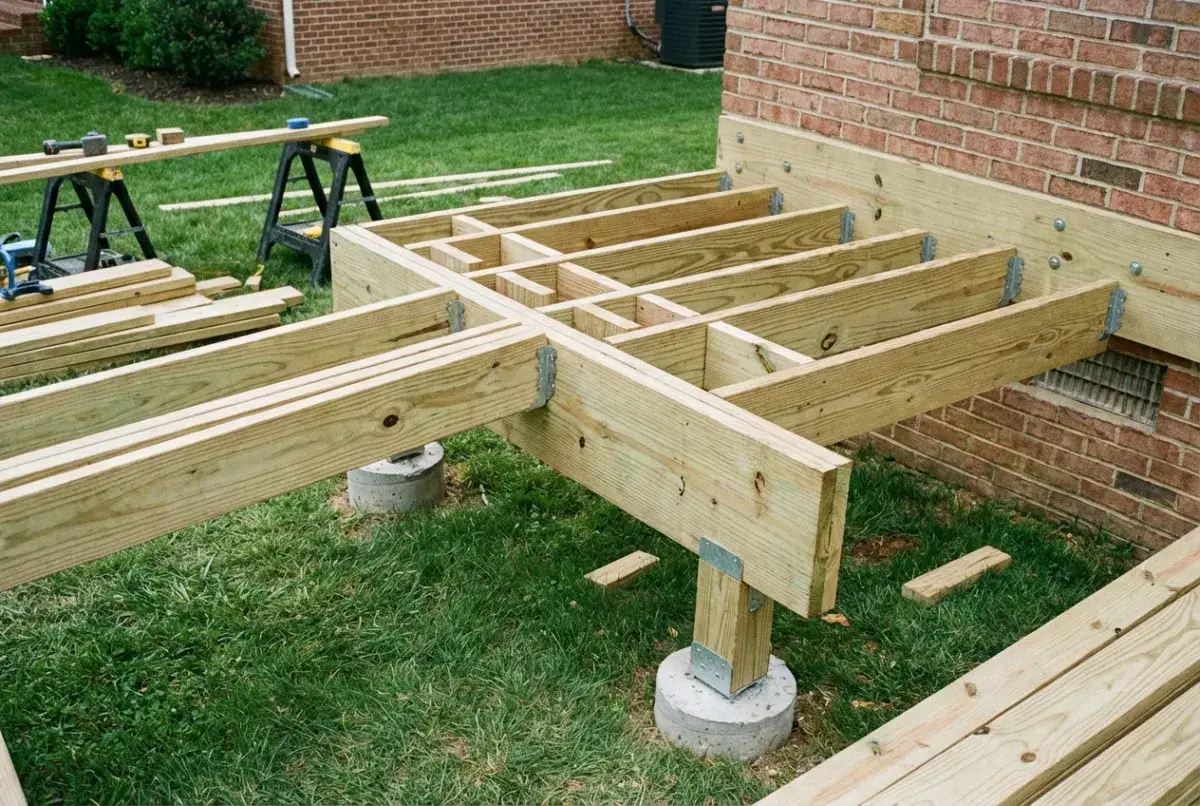
Maryland Deck Building Codes
Maryland follows the International Residential Code (IRC) with local amendments by county. Here are the key code requirements every Maryland homeowner should know. Crown Remodeling handles all code compliance, permitting, and inspections for you.
Permit Requirements
A building permit is required in virtually all Maryland counties for new deck construction, structural modifications, or any deck attached to the house. Baltimore County, Howard County, Anne Arundel County, and Montgomery County all require permits. Freestanding decks under 200 sq ft and under 30" above grade may be exempt in some jurisdictions — we verify for your specific location.
Railing Height Requirements
Any deck surface 30 inches or more above grade must have a guardrail. Minimum railing height is 36 inches for residential decks under 30 inches above grade and 42 inches for decks more than 30 inches above grade. Baluster spacing must not allow a 4-inch sphere to pass through. All our railings exceed these minimums.
Frost Line Footings
In Maryland, deck footings must extend at least 30 inches below grade to reach below the frost line. This prevents frost heaving from shifting your deck during winter freeze-thaw cycles. We use concrete pier footings with Simpson post bases for a secure, code-compliant connection that lasts decades.
Ledger Board Attachment
The ledger board (which connects the deck to your house) must be through-bolted or lag-screwed into the home's rim joist with proper flashing to prevent water intrusion. Improper ledger attachment is the #1 cause of deck collapse nationwide. We use stainless steel or hot-dipped galvanized hardware with self-adhering membrane flashing.
Joist & Post Sizing
Joist size depends on span and spacing. Common configurations: 2x8 joists at 16" on center for spans up to 10'6", 2x10 for spans up to 13'6", and 2x12 for spans up to 16'. Posts must be a minimum 6x6 for heights over 8 feet. Beam sizing is calculated based on post spacing and tributary load area. We handle all structural engineering.
Setback & Height Rules
Most Maryland counties require setbacks from property lines (typically 5–15 feet depending on the county and zoning). Decks that extend above a certain height or encroach on easements may require a variance. HOA restrictions can add additional requirements for materials, colors, and design. We research all local requirements before we design your deck.
Crown Remodeling handles all permit applications, engineering drawings, inspections, and code compliance. You don't have to navigate the building department — we do it for you as part of every project. MHIC #131554.
Deck Design Ideas
Not sure what style of deck is right for your home? Here are the most popular designs we build for Maryland homeowners, along with what makes each one special.
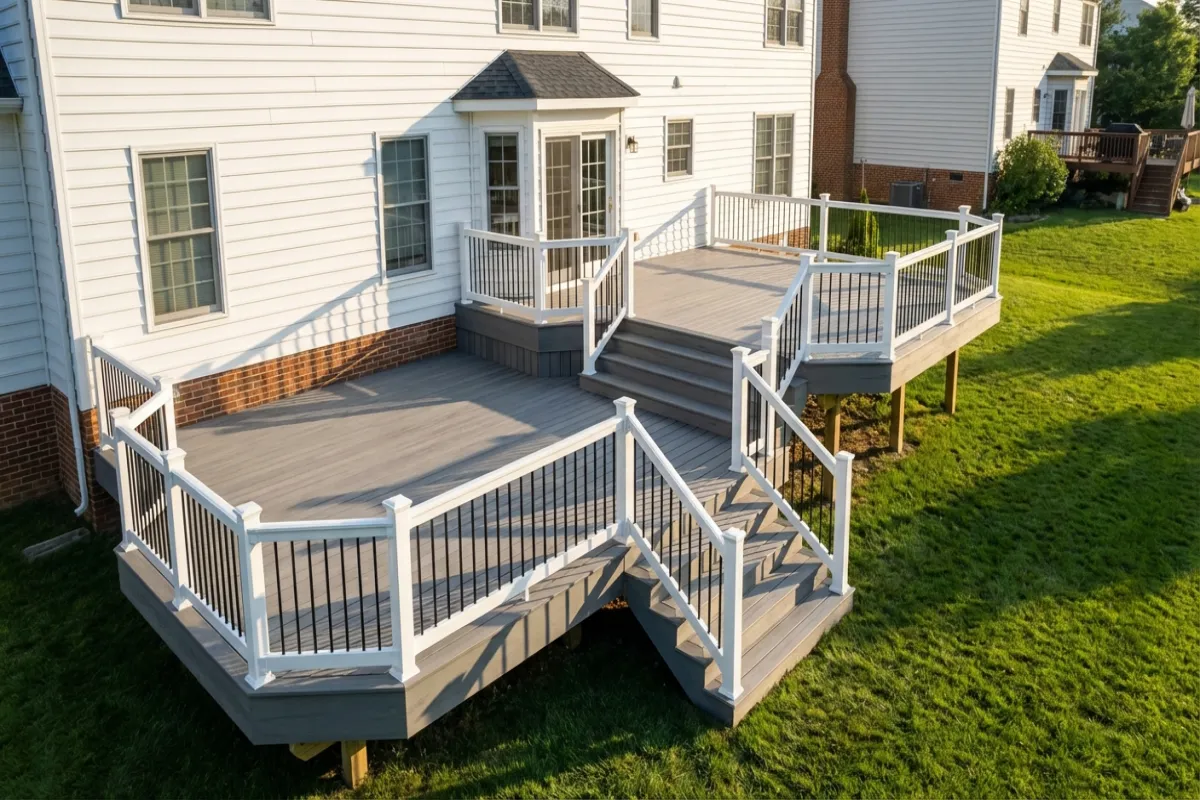
Multi-Level Decks
Perfect for sloped yards common in Baltimore County and Howard County. Create distinct zones for dining, lounging, and grilling on different levels connected by stairs. Multi-level designs add visual interest and maximize usable space on uneven terrain. Starting around $20,000–$45,000 depending on total square footage and materials.
Wraparound Decks
Extend your outdoor living around two or more sides of your home. Wraparound decks work beautifully on corner lots and homes with views from multiple rooms. They create a natural flow between indoor and outdoor spaces and provide access from multiple entry points. Ideal for entertaining and maximizing afternoon shade.
Pool Decks
Composite or PVC decking around your pool provides a splinter-free, slip-resistant surface that won't absorb water or harbor mold. We recommend PVC (Azek) for pool surrounds because it absorbs zero moisture and stays cooler than standard composite in lighter colors. Built-in benches and storage make pool days more convenient.
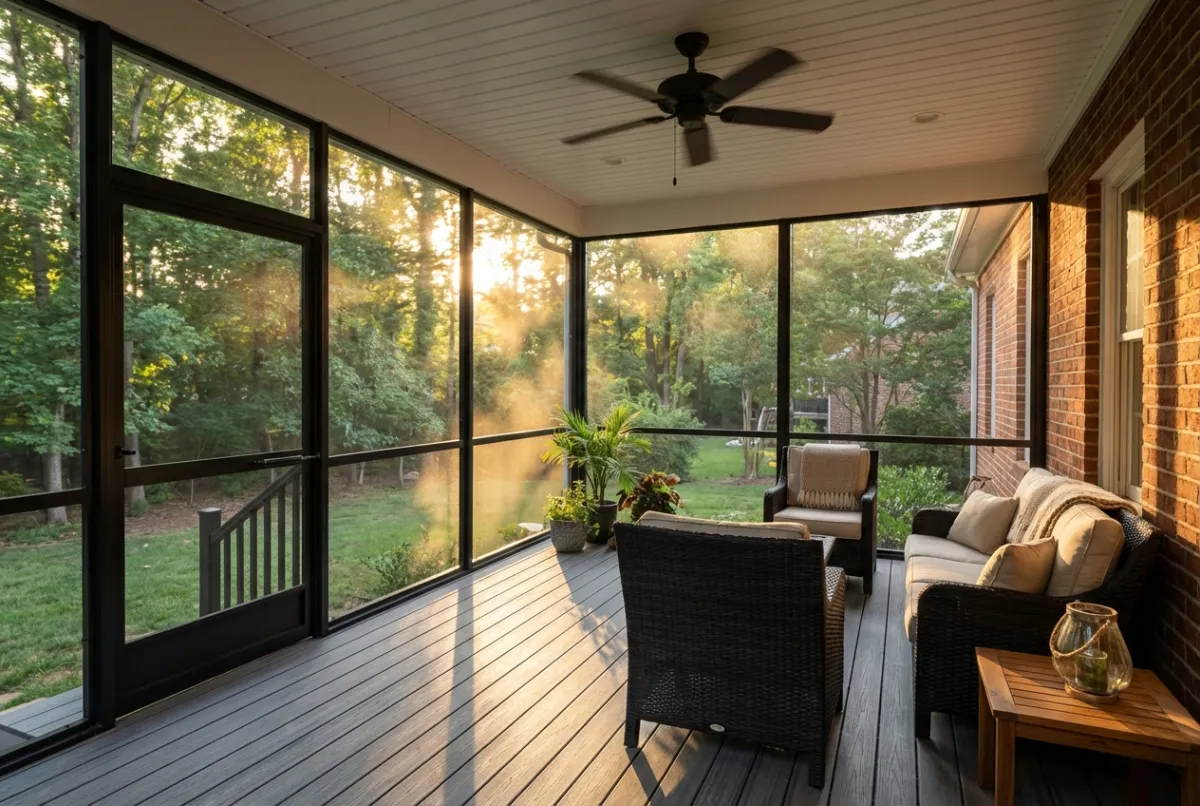
Screened-In Decks
Convert your open deck into a bug-free, three-season room with screen panels, a ceiling, and optional ceiling fan. Screened porches are one of the most requested features from Maryland homeowners tired of mosquitoes and gnats ruining summer evenings. Add electrical outlets, recessed lighting, and a TV mount for the ultimate outdoor living room.
Covered Decks & Pergolas
A pergola or solid roof structure provides shade and rain protection so you can use your deck in any weather. Options range from open-beam pergolas ($5,000–$15,000) to fully roofed structures tied into your home ($15,000–$40,000). Louvered roof systems allow you to adjust sunlight and ventilation with the touch of a button.
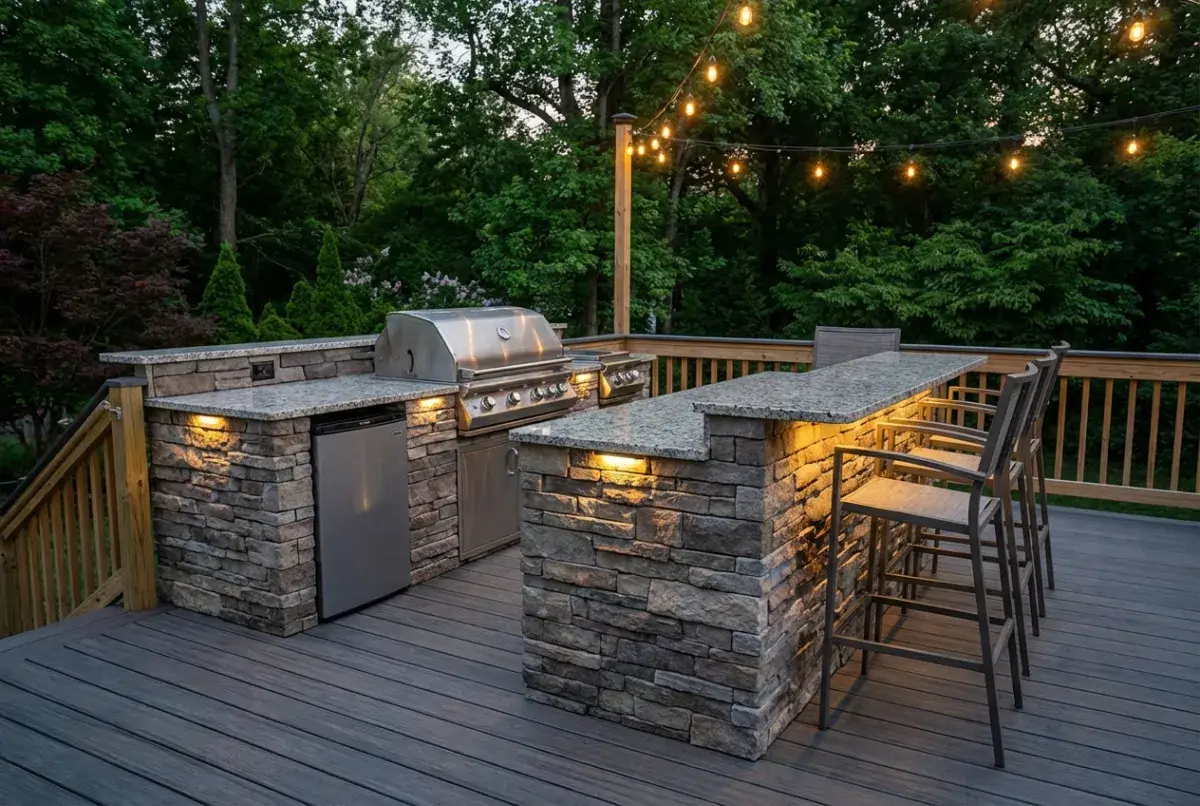
Outdoor Kitchen & Fire Pit Decks
Built-in grills, countertops, sinks, and fire pits turn your deck into a true outdoor kitchen and gathering space. Fire pits on decks require fire-rated materials underneath, proper clearances, and gas line connections for permanent installations. We design and build the framing, utilities, and fire-safe surrounds to bring your outdoor kitchen vision to life.
Deck Maintenance Guide for Maryland
Maryland's four-season climate puts unique demands on outdoor structures. Hot, humid summers encourage mold growth. Freezing winters cause wood to expand and contract. Here's how to keep your deck in top condition year after year, based on the material you choose.
Wood Deck Maintenance
- Spring: Power wash to remove winter grime, mold, and pollen. Use a deck-specific cleaner for stubborn stains. Let dry 48 hours before staining.
- Stain/Seal: Apply a penetrating stain or water-repellent sealer every 1–2 years. High-traffic areas and sun-exposed surfaces may need annual treatment.
- Inspect: Check for rotted boards, loose fasteners, wobbly railings, and ledger board separation at least once per year. Catch problems early.
- Fall prep: Clear leaves and debris from between boards and around the ledger board. Standing debris traps moisture and accelerates rot.
- Winter: Use a plastic shovel (never metal) to clear snow. Avoid calcium chloride ice melt on wood — use calcium magnesium acetate instead.
- Annual cost: Budget $500–$1,000/year for stain, sealant, cleaners, and occasional board replacement. Over 20 years, that's $10,000–$20,000.
Composite & PVC Deck Maintenance
- Spring & Fall: Wash with soap and water using a soft-bristle brush or garden hose. Most composite decks need only two cleanings per year.
- Mold prevention: In shaded areas, sweep leaves and debris regularly. Composite doesn't rot, but surface mold can grow on organic matter sitting on the boards.
- Stain removal: Clean food, grease, and wine spills promptly with soap and water. For stubborn stains, use the manufacturer's recommended cleaner.
- Avoid: Do not use a pressure washer above 1,500 PSI on composite. Do not use bleach-based cleaners. Do not sand the surface.
- Winter: Plastic shovel for snow. Composite handles freeze-thaw without cracking. Most ice melt products are safe for composite and PVC.
- Annual cost: Essentially $0 beyond occasional soap. No staining, no sealing, no board replacement. That's the whole point of going composite.
Deck ROI & Home Value
A deck isn't just an expense — it's one of the highest-ROI home improvements you can make. Here's why Maryland homeowners consistently rank deck additions as one of their best investments.
Cost Recovery at Resale
Wood deck additions recoup 65–75% of their cost at resale. Composite decks recoup 60–70%. Both rank among the top-5 home improvement ROIs nationally.
Usable Months in Maryland
A well-designed deck extends your usable living space from April through November — and even into winter with a fire pit, heaters, or a screened porch enclosure.
Added Living Space
Adding a deck is the most affordable way to gain significant square footage. Compared to an interior addition ($200–$400/sqft), decks deliver living space at a fraction of the cost.
In Maryland's competitive real estate market, a quality deck makes your home stand out. Buyers consistently list outdoor living space as a top priority. A deck signals that the home has been well-maintained and thoughtfully improved. Homes with decks typically sell faster and often receive higher offers than comparable homes without outdoor living spaces.
Beyond financial returns, there's the daily value: summer barbecues, morning coffee, family dinners outdoors, and a private retreat right outside your back door. Outdoor living trends continue to accelerate post-2020, with Maryland homeowners investing more than ever in their backyards. A deck built by Crown Remodeling isn't just a structure — it's where your family's best memories happen.
Our 7-Step Deck Building Process
Free Consultation
We visit your home, measure the space, assess site conditions (slope, soil, access), discuss your vision, and take photos. No pressure, no obligation.
Custom Design
Based on your input, we create a detailed deck design with dimensions, layout, material recommendations, and a transparent written estimate.
Material Selection
Choose from composite, wood, PVC, or hardwood options. We bring samples to your home so you can compare colors and textures against your siding and trim.
Permits & Engineering
We handle all permit applications, engineering drawings (if required), and HOA approvals. You don't have to set foot in a building department.
Site Preparation
Demolition of existing structures (if needed), excavation for footings, utility marking, and ground preparation. We protect your landscaping and property.
Construction
Our crew builds your deck from the ground up — concrete footings, structural framing, decking boards, railings, stairs, and any add-ons. Clean, efficient, built to exceed code.
Final Inspection & Walkthrough
We schedule the county inspection, walk you through the finished project, clean up the jobsite completely, and make sure every detail meets your expectations before we leave.
Deck Building Projects
Deck Building Across Maryland & Beyond
Licensed in 4 states. We build decks for homeowners across these counties and more.
Decking FAQ
Most deck builds are completed in 1–3 weeks depending on size, complexity, and weather. A standard 200–300 sq ft deck typically takes 5–7 working days once materials arrive. Larger multi-level decks or projects with screened porches may take 2–4 weeks. Permit approval in Maryland counties typically adds 2–4 weeks before construction begins. Crown Remodeling provides a clear timeline during your design consultation.
Yes, most Maryland counties require a building permit for new deck construction, structural modifications, or any deck higher than 30 inches above grade. Baltimore County, Howard County, Anne Arundel County, and Montgomery County all require permits. You will need a site plan, structural drawings, and sometimes engineering stamps for elevated decks. Crown Remodeling handles all permit applications, engineering drawings, and inspections as part of our service.
Wood decking (pressure-treated pine) costs $15–$25 per square foot installed and lasts 10–15 years but requires annual staining, sealing, and inspection for rot and splinters. Composite decking (Trex, TimberTech) costs $30–$50 per square foot installed and lasts 25–30 years with virtually zero maintenance — just soap and water cleaning. Over 20 years, the total cost of ownership is often lower with composite when you factor in $500–$1,000 per year in wood maintenance costs.
Deck lifespan depends on the material: Pressure-treated pine lasts 10–15 years, cedar lasts 15–20 years, redwood lasts 20–25 years, composite (Trex/TimberTech) lasts 25–30 years, PVC (Azek) lasts 25–30 years, Ipe hardwood lasts 40–75 years, and aluminum decking lasts 50+ years. Proper maintenance significantly extends the life of wood decks, while composite and PVC require minimal upkeep to reach their full expected lifespan.
Composite decking is the best all-around choice for Maryland's climate, which includes hot humid summers, freezing winters, heavy rain, and occasional snow. Composite resists moisture absorption, won't crack from freeze-thaw cycles, and doesn't rot or attract termites. PVC decking offers even better moisture resistance and zero water absorption, making it ideal for pool decks or waterfront properties. For budget-conscious homeowners, pressure-treated pine with annual maintenance is a solid option.
Deck costs in Maryland range from $15 per square foot for pressure-treated pine to $70 per square foot for premium aluminum decking. The most common ranges are: pressure-treated pine $15–$25/sqft, cedar $25–$35/sqft, composite (Trex) $30–$50/sqft, PVC (Azek) $35–$55/sqft, and Ipe hardwood $40–$65/sqft. These prices include materials, labor, and standard railing. Final cost depends on deck height, design complexity, railing style, and site conditions.
Elevated decks typically cost 20–50% more than ground-level decks due to deeper footings, heavier framing lumber, taller posts, required engineering plans, and additional safety features like guardrails and stairs. A 300 sq ft elevated composite deck in Maryland typically runs $15,000–$25,000 compared to $9,000–$15,000 for a ground-level deck of the same size and material. Crown Remodeling has extensive experience building elevated decks and handles all engineering, permitting, and inspections.
For wood decks: power wash annually in spring, apply stain or sealant every 1–2 years, inspect for rot and loose fasteners, clear debris from between boards, and shovel snow without using metal tools. For composite decks: wash with soap and water twice a year, remove leaves and debris to prevent surface mold in shaded areas, and clean food or grease spills promptly. Before winter, remove furniture and planters, ensure proper drainage, and apply a fresh coat of sealant to wood decks.
In Maryland's climate, wood decks should be stained or sealed every 1–2 years. High-traffic areas and horizontal surfaces exposed to direct sun may need re-staining annually. A simple water test tells you when it's time: splash water on the deck boards — if it soaks in rather than beading up, the stain has worn through and needs reapplication. Always power wash and let the deck dry for 48 hours before applying new stain.
Before winter: clean the deck thoroughly, clear all debris from between boards and around the ledger board, move planters and heavy furniture to prevent moisture traps, ensure all drainage gaps are clear, and apply a fresh coat of sealant to wood decks. During winter: use a plastic shovel (never metal) to remove snow, avoid ice melt products containing calcium chloride on wood or composite — use calcium magnesium acetate instead — and never let snow pile up against the house above the ledger board.
Both Trex and TimberTech are premium composite decking brands with 25-year warranties. Trex offers three tiers: Enhance (budget), Select (mid-range), and Transcend (premium). TimberTech offers AZEK (PVC — their premium line), TimberTech PRO, and TimberTech EDGE. Both resist fading, staining, and moisture. TimberTech's AZEK line is actually PVC, not composite, offering superior moisture resistance for pool decks. Crown Remodeling installs both brands and can help you compare options with physical samples at your home.
We install a wide range of railing systems: vinyl ($20–$40 per linear foot, budget-friendly and low-maintenance), composite ($25–$50/linear ft, matches deck boards), aluminum ($30–$60/linear ft, sleek and powder-coated), cable railing ($50–$120/linear ft, modern with unobstructed views), and glass panel railing ($60–$150/linear ft, maximum visibility). Maryland code requires railings on any deck 30 inches or more above grade, with a minimum 36-inch height for decks under 30" and 42 inches for decks over 30" above grade.
Yes, in many cases we can build a deck frame over an existing concrete patio using a sleeper system or pedestal system. This avoids the cost of demolishing the concrete and provides proper drainage underneath. The concrete must be structurally sound and have adequate drainage slope. We can also install deck tiles or pedestal-mounted deck boards directly over concrete for ground-level applications. A site inspection will determine the best approach for your specific situation.
Yes, composite decking can get noticeably warmer than wood in direct sunlight, especially darker colors. On a 90-degree Maryland summer day, dark composite boards can reach 140–160°F in full sun. Lighter colors stay 20–30 degrees cooler. To mitigate heat: choose lighter deck board colors, add shade structures like a pergola or shade sail, plant shade trees, or consider PVC decking which runs slightly cooler than composite. Barefoot comfort is a real consideration for pool decks and sun-exposed areas.
Popular deck lighting options include: LED post cap lights ($30–$80 each), stair riser lights ($20–$50 each, required by code in many areas for safety), under-rail LED strips ($5–$15 per linear foot), recessed deck board lights ($25–$60 each), string lights on pergola structures, and landscape lighting around the deck perimeter. Low-voltage LED systems are the most popular choice, running on a transformer and costing $1,000–$4,000 total installed depending on scope. We integrate lighting during new construction or add it to an existing deck.
A pergola over an existing deck costs $5,000–$15,000 depending on size, material, and whether it includes a retractable canopy or louvered roof. A fully covered deck with a solid roof tied into the home's structure costs $15,000–$40,000, as it requires structural engineering, roofing materials, and potentially matching your home's exterior. A screened porch conversion (enclosing an existing deck) typically runs $12,000–$30,000. Crown Remodeling designs and builds all types of covered outdoor structures.
We recommend a thorough deck inspection at least once per year, ideally in spring before the outdoor season begins. Check for: loose or corroded fasteners, rotting boards or structural members, wobbly railings, cracked or splintered boards, ledger board separation from the house, settling or shifting footings, and water pooling or drainage issues. For decks over 15 years old, consider a professional structural inspection every 2–3 years. Catching problems early prevents costly repairs and safety hazards.
The number one cause of deck collapse is improper ledger board attachment — the board that connects the deck to the house. Other causes include undersized or rotted structural members, inadequate footings, corrosion of connectors, and overloading. Prevention starts with proper construction: through-bolted or lag-screwed ledger boards with flashing, code-compliant footings below the frost line (30 inches in Maryland), properly sized joists and beams, and Simpson Strong-Tie connectors at all structural connections. Crown Remodeling builds every deck to exceed IRC code requirements.
The best time to build a deck in Maryland is late spring through early fall (April through October) when weather conditions are most favorable for construction. However, decks can be built year-round as long as the ground isn't frozen for footing installation. Booking in winter or early spring often means shorter lead times and potentially better scheduling flexibility. If you want your deck ready for summer entertaining, we recommend starting the planning process in January–February to allow time for design, permitting, and construction.
Yes, Crown Remodeling offers flexible financing options for deck projects through our financing partners. We offer plans with low monthly payments, competitive interest rates, and terms from 12 to 144 months. Many homeowners finance their deck project to preserve cash while still getting the outdoor living space they want. Visit our financing page or call (443) 381-7099 to learn about current promotions and pre-qualify with no impact to your credit score.
According to Remodeling Magazine's Cost vs. Value report, a wood deck addition recoups roughly 65–75% of its cost at resale, while composite decks recoup approximately 60–70%. In Maryland's competitive housing market, a well-built deck can make your home sell faster and attract more offers. Beyond financial ROI, a deck extends your usable living space by 200–600+ square feet and adds an outdoor room that Maryland families use 7–8 months of the year.
For most Maryland homeowners, yes. A 300 sq ft composite deck costs roughly $9,000–$15,000 versus $4,500–$7,500 for pressure-treated wood — about $4,500–$7,500 more upfront. But wood decks require $500–$1,000 per year in staining, sealing, and maintenance. Over 20 years, total cost of ownership for wood is $14,500–$27,500 versus $9,000–$15,000 for composite (which needs only soap and water). Composite breaks even in 5–7 years and saves $5,000–$12,000 over two decades while looking better the entire time.
Ready for a New Deck?
Get a free design consultation and detailed estimate. No pressure, no obligation — just honest advice from a family that builds things right.